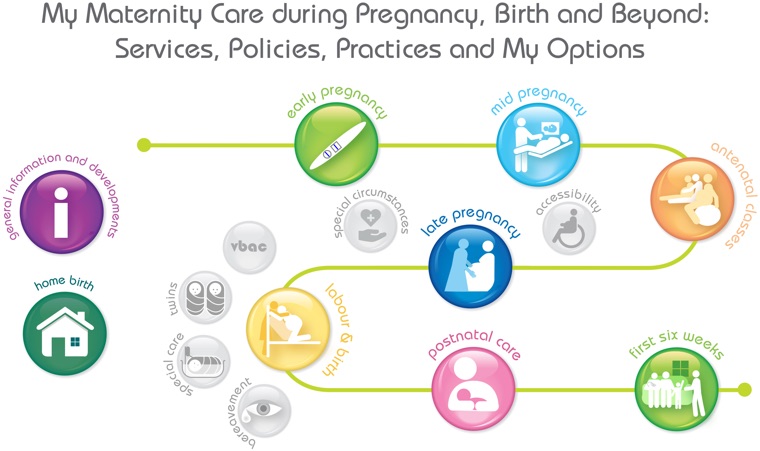
General Information and Developments
Special Care
If my baby needs specialised care straight after birth, is it available in my hospital?
Every maternity unit in the country has some degree of special care available, either a special care baby unit (SCBU) or a neonatal intensive care unit (NICU), or both. In some cases, there is a high dependency unit for babies who do not need to be in the NICU but who are not well enough to be in SCBU. If no NICU is available, some very sick babies or very premature babies are transferred to a tertiary hospital for intensive care.
| Is there a SCBU?: | |
|---|---|
| Number of cots in SCBU: | |
| Is there a NICU?: | |
| Number of cots in NICU: |
Will I be able to touch and hold my baby?
All units encourage skin-to-skin contact (touching, stroking), and in all but one unit kangaroo care (putting baby chest-to-chest with parents) is practised. There may be medical policies where this is limited, depending on the baby's condition.
As kangaroo care is extremely beneficial for babies, especially premature babies, it is important that parents request as much time as possible caring for their babies in SCBU/NICU in this way.
| How is skin-to-skin contact encouraged?: | Show All |
|---|---|
| Is kangaroo care practiced?: | |
| Kangaroo care additional information: | Show All |
If my baby is in a special neonatal care unit, who can visit?
There are no restrictions on visiting for parents of the baby.
Below is a list of visiting arrangements for family members, which varies from unit to unit.
SCBU
| Parents: | |
|---|---|
| Siblings: | |
| Grandparents: | |
| Other family: |
NICU
| Parents: | |
|---|---|
| Siblings: | |
| Grandparents: | |
| Other family: |
If my baby requires special care, is there a room where I can stay overnight?
Over half of the units have a room where the mother/parents can stay, but these rooms are usually only used to accommodate mothers/parents in special circumstances or to room-in with their babies for one night before bringing them home.
| Is there a room where parents can stay?: | |
|---|---|
| Additional comment: |
When I'm visiting my baby in special care, is there somewhere for me to eat?
Very few units have hot food available 24 hours a day in the restaurant. The vast majority of units have hot food available at limited times in the hospital restaurant or staff canteen. About one-third of units have microwave ovens that parents can use. More than half have tea/coffee facilities. A few units have restaurant discounts for parents whose babies are in special care.
| Hot food 24/7 in restaurant: | |
|---|---|
| Hot food, limited times in restaurant: | |
| Microwave oven available: | |
| Tea/coffee facilities: | |
| Other comments: |
What about feeding my baby in special care?
Seven units reported that baby-led feeding (the baby is fed when they show signs of hunger, such as hands up to mouth, lip smacking, rooting, eventually crying) is practised. Fourteen units stated the use of baby-led feeding was decided on an individual basis. No unit said baby-led feeding was not practised.
Donated breastmilk is used in 15 units when necessary. Where breastmilk is not being used, or sometimes in addition to breastmilk, formula milk is provided, and in certain cases specialised formula milk is provided.
For premature babies, expressed breastmilk sometimes has fortifier added. Babies can be fed in a variety of ways depending on their needs/condition. In addition to breastfeeding the following methods can be used to give babies expressed breastmilk, fortified expressed breastmilk or formula milk: by bottle, cup, nasogastric tube, syringe and orogastric. If necessary, IV fluids are given. Most units (75%) stated they always seek consent from parents for the type of milk and the method of feeding, with some stating that permission is only asked when using donated breastmilk.
Is baby-led feeding practised?
| Yes: | |
|---|---|
| Decided on individual basis: | |
| No: | |
| Additional comment: |
Does the unit use donated milk from the milk bank?
| Yes: | |
|---|---|
| At maternal request: | |
| No: | |
| Additional comment: | |
| Supplements in addition to, or instead of, mother's breastmilk: | |
| Details: | |
| How babies are given these feeds: | |
| Staff trained in paced bottle feeding and cup feeding: | |
| How and when is non-nutritive sucking encouraged?: |
If I have twins/triplets/quads etc., will I get additional support?
The vast majority of units stated that they provide additional support to mothers of twins or more.
| Additional support: | |
|---|---|
| Details: | Show All |
How will my baby's development be supported?
Some units specified using the NIDCAP programme to support a baby's emotional and psychological development, in addition to meeting their physical needs. Babies are not handled too often, and cradling positions can be used. Kangaroo care with parents is highly beneficial for a baby's development and is encouraged in many units. In order to prevent overstimulation, some units mentioned keeping noise levels low where possible and covering incubators to block out bright lights. Some units didn't answer this question. Answers from some other units were not clear.
| How is emotional/psychological/developmental support offered to babies in SCBU/NICU?: | Show All |
|---|---|
How will I be supported emotionally and psychologically if my baby needs special care?
Generally units encourage parents to be very involved in their baby's care. There are often multidisciplinary teams, sometimes including chaplains, to provide extra support if needed. In addition, most units provide a range of information leaflets, including ones about support organisations and ones written by support organisations.
| Support for parents: | Show All |
|---|---|
If I'm breastfeeding my baby in special care, what extra supports are available to me?
This varies from unit to unit, with most units providing a good level of support in certain areas (e.g. training in hand expression and in the use of breast pumps, storage facilities for breastmilk, etc.). However, not every unit provides a quiet, comfortable room to express in.
More units have lactation consultants now than when we last surveyed them in 2011, but they are typically available only Monday-Friday during the daytime. Currently, no unit has lactation consultants available 24 hours a day.
Less than a third of units support mothers through free or subsidised meals or the loan of a pump for home use. Lack of such supports could create additional expense and stress for mothers who need to be well supported in order to be able to provide the optimum food for their babies in special care.
The following is the range of practical supports offered:
| Training in hand expression – all units: | |
|---|---|
| Training in the use of breast pumps – all units: | |
| Free breast pump accessories kit provided – 17 out of 19 units: | |
| Free sterile breastmilk containers provided - 18 out of 19 units: | |
| Storage facilities for breastmilk – all units: | |
| Seating to facilitate pumping at their baby's bedside – all units: | |
| Quiet, comfortable room to express in – 17 out of 19 units: | |
| Access to drinking water – all units: | |
| Access (on some shifts) to a certified lactation consultant (IBCLC) – 18 out of 19 units: | |
| Access (24 hours) to a certified lactation consultant (IBCLC) – 0 out of 19 units: | |
| Support to initiate milk supply within 6 hours of birth – 18 out of 19 units: | |
| Support for establishing and maintaining milk supply – all units: | |
| Access to free or subsidised meals (24 hours) if mother has been discharged – 11 out of 19 units: | |
| Loan of a breast pump for home use – 11 out of 19 units: | |
| Other comments: |
What breast pumps are available?
Most units answered this question. There are different pumps available in each unit but most are electric double pumps.
| If breast pumps are available, what type (manual/electric, single/double, hospital grade etc.) does the unit have and how many of each type?: | |
|---|---|
If I am in the postnatal ward and my baby is in special care, how am I supported?
Units reported good levels of communication between postnatal ward staff and neonatal care staff to ensure that mothers are well informed and well supported. Mothers are encouraged to spend as much time in special care as possible. Where this is not possible, mothers are informed of their baby's progress regularly. Some units specified that meals can be brought to the mother or kept for her as necessary.
| What communication is there between the postnatal ward & NICU/SCBU to ensure mothers who are separated from their babies are supported?: | |
|---|---|
If I leave the hospital before my baby is discharged, what happens?
Open visiting for parents still applies and all units encourage daily visits where possible. Additional help is available for breastfeeding and expressing breastmilk (loan of pump in some instances, room to express, access to lactation consultant, breastmilk storage). Parents are encouraged to be very involved in their baby's care. Support from special care/neonatal staff is ongoing, and you may also be offered support from the pastoral care worker, social services and/or your local public health nurse. In some units, parents are assisted with costs that they incur when visiting their baby.
| Additional support given to mothers who are discharged before their baby: | |
|---|---|
| Specific support provided for a breastfeeding mother who is discharged before her baby: | |
| Ways parents are assisted with costs when visiting their baby/babies in SCBU/NICU: |